Wednesday, November 21, 2012

My Thankful Garden

Before we moved here I resold or gave away many holiday decorations. I kept only what was special to me. A way of living with less is something I strive for. Each year, instead of purchasing more decor, I try to turn to what I have and what won't be wasteful. I turn to my garden for many things; solitude, peace, retreat, nature, food, joy and celebration. The garden is always celebrating in season. Spring blooms, Summer blooms, its Fall display, all naturally, simply, breathtakingly beautiful.

Untitled
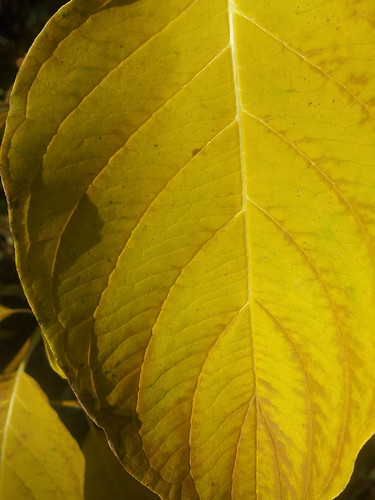
Yellow Twig Dogwood leaf in the garden

With a few cuttings brought into the house I feel in spirit with this holiday celebration and in spirit with my garden and the earth.

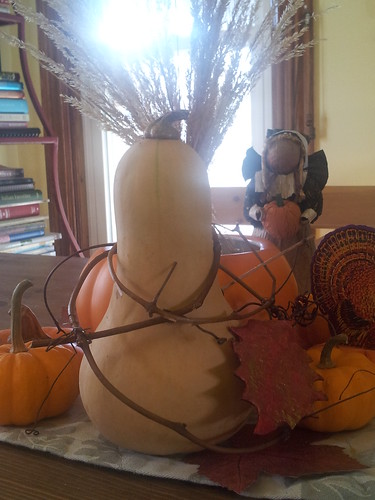
A butternut squash (which will be eaten) wrapped in grapevine adorns the table. The pumpkin vase is filled with the cuttings of Karl Forester grass blooms (which will be returned to the garden).
Untitled

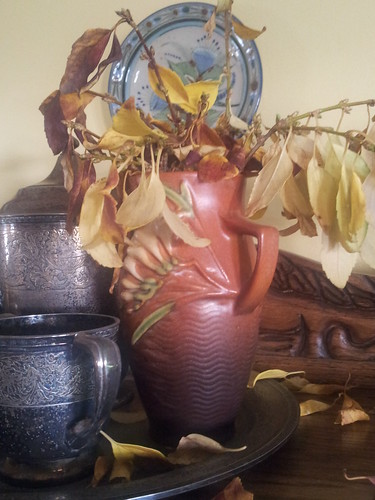
A few colorful leaf cuttings from the Forsythia (strategic pruning) look pretty in this Roseville vase. My husband used to collect Roseville pottery. Its range of colors and style can match everyday or a holiday.
Untitled

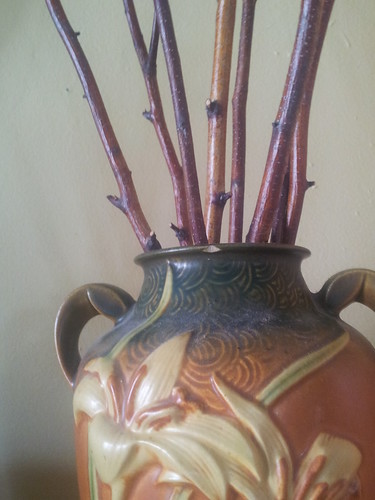
Another Roseville vase filled with Birch branches (collected from the dump).
Untitled

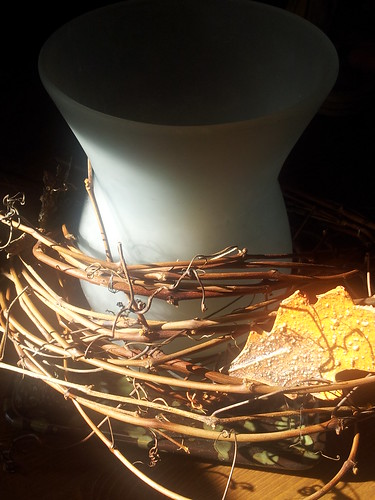
More grapevine (there is plenty to prune) wraps a hurricane candle.
Untitled

I am so thankful for my garden. Its physical demands drain me of all living frustration. My garden thanks me. Its beauty forces me to be still and wonder. I bring its beauty indoors to celebrate. We also feast most evenings from the Potager which graces our table with the freshest and tastiest food. My garden celebrates and shares with me little moments each day and for that I am very thankful.

How does your garden thank you? What does it give to you? What elements of your garden do you bring indoors to decorate and celebrate?
Friday, November 9, 2012

Going Nativar: Gro Low Fragrant Sumac

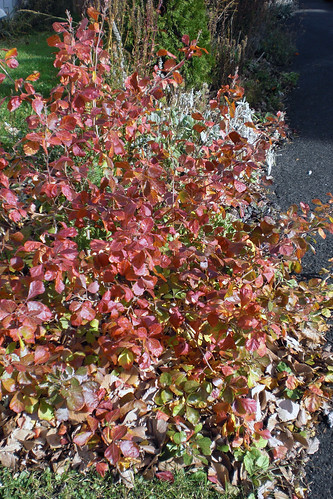
I just learned of the term nativar, a phrase sometimes used to describe a cultivar selected from a native plant. Rhus aromatica 'Gro Low' is just that. It has been specially selected to clone a desired trait – in this case growing "low," or only upwards to 2 feet, from our true native Fragrant Sumac which typically reaches heights of up to 6-12 feet.

How do you know if a plant is a nativar or cultivar? Scientific botanical names should be written in italics with the genus name capitalized and the species name in lower case. The name of the cultivar should not be italicized but enclosed by single quotes following the species name. i.e Rhus (genus) aromatica (species) 'Gro Low' (cultivar). Another example is Betula nigra 'Heritage,' a familiar cultivar of the native river birch commonly available in nurseries. I also recently planted this "nativar" in my garden.

I admit, I have been careless in displaying cultivar names in some of my posts but now that I have a clear understanding of this naming system, I will make it a point to correctly display all cultivars and nativars. A good nursery will also make it a point to display plant names properly.

Are nativars the same as planting a native plant? I have heard yes and no. My experience is somewhat limited as my garden is still quite young. Nativars may be developed to produce less berries (less mess) which would defeat the purpose of planting a berry plant for me – the main reason I like to plant native is for wildlife value and berries are valuable! So, in that situation the answer would be no. But I will agree that sometimes a nativar is a better option for those of us with limited space as in the case of the Gro Low Fragrant Sumac. Its size in particular makes it a better choice to grow alongside my "Nice Driveway" as well as its preference for a well drained soil in full sun.

CIMG7247

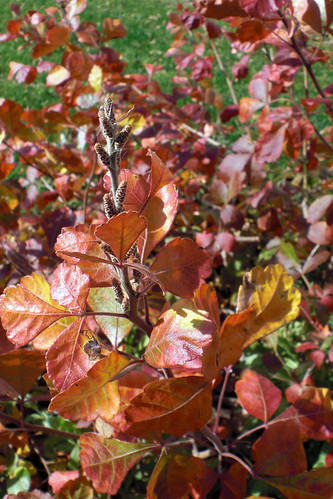
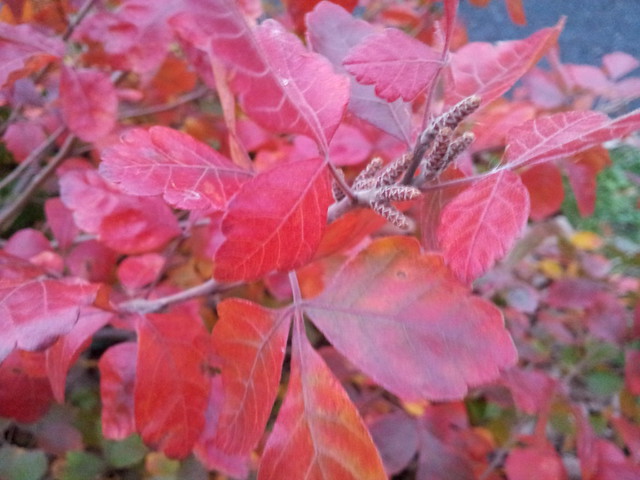
And as for berries? Gro Low Sumac will produce fuzzy red berries attractive to birds. Interestingly, I've read some nativars of Gro Low are monoecious, having both male and female flowers on the same plant while most are more commonly dioecious, requiring a male plant to pollinate a female plant. The male flowers are small catkins and the female flowers appear in clusters which then form berries. All I observe on mine are catkins (male), so I think mine may be an all male plant and I am now on the lookout for a Gro Low plant that displays female flowers.

CIMG7248
Male Catkins

Untitled
Male Catkins

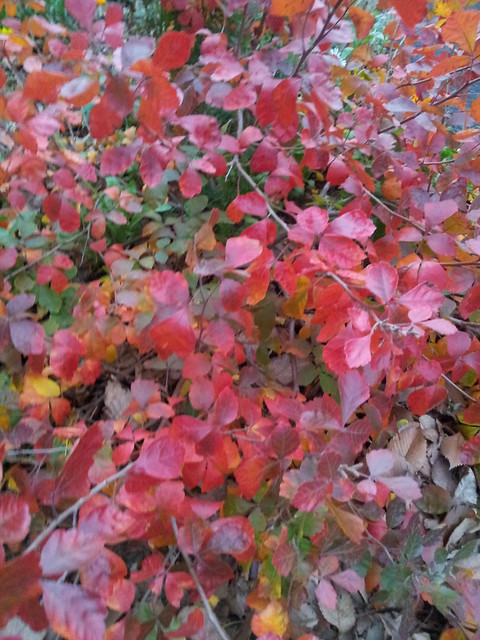
In Spring both male and female yellow flowers form a delicate eye-catching haze. Gro Low is also an accepted larval host of the Red-Banded Hairstreak Butterfly. It also makes a great alternative to the invasive Burning Bush - its Fall color is fantastic! You won't have to prune it into a "cupcake," either. Mine is still putting on a great show while all the Burning Bushes in the neighborhood are now bare. Consider using this shrub as a ground cover as well. It would be a great choice for an awkward slope. Mine softens the edge of our over-sized driveway nicely.

Untitled

Most of the plants selected for my garden have some type of wildlife value. Natives tend to offer the best wildlife value which is why I feature native plants in my "Going Native" posts for other gardeners to consider. Sumacs are highly valuable to wildlife but can be large or suckering so if you have a small garden, a nativar such as Gro Low Sumac offers a happy medium. I have another bird-planted (?) Sumac variety growing in my garden that I believe is truly native. It may not be the best choice for the space but hey, if it fell free from the sky, why not try. Once I'm confident that I've identified it correctly, I'll share it with you.

Tuesday, October 30, 2012

Project: Cold Frame

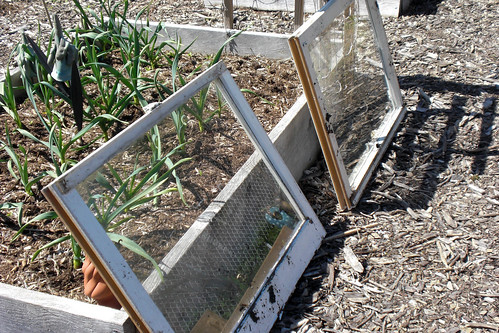
Late last Fall my husband, ever thoughtfully thinking of me, chanced upon some discarded windows on the side of the road. He picked them up knowing that I have been kicking the idea around of constructing some sort of cold frame – and that's exactly what we used them for.

CIMG7012

Although we started this project early in the Spring, we didn't finish until well into the growing season but it made me reconsider hinging the windows onto the frame so that I could still use the frame as a planting bed during the height of summer.

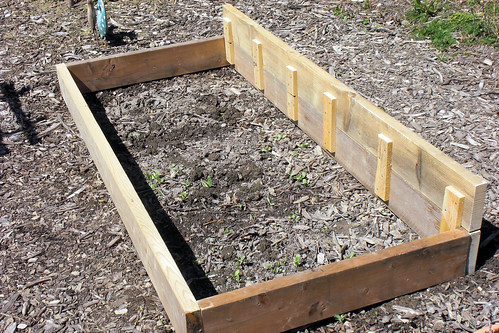
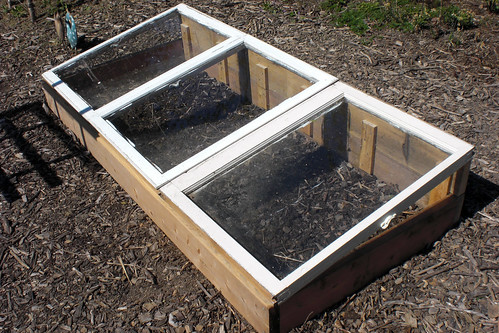
We built a simple frame out of 2x6 pine. The base is 6" high and the top is 12" high. The sides are a 2x6 cut on a diagonal. To build the frame we referred to a wonderful article in Fine Gardening on how to construct a cold frame (see video link here). We did not spend much. This cold frame is an experiment for me, much like all gardening in my view. I think you can read and learn from other sources, maybe even mimic them exactly, but it will be your experience and experimentation that will ultimately teach you the "zen of gardening."

CIMG7011


CIMG7019
Making sure the windows fit the base.

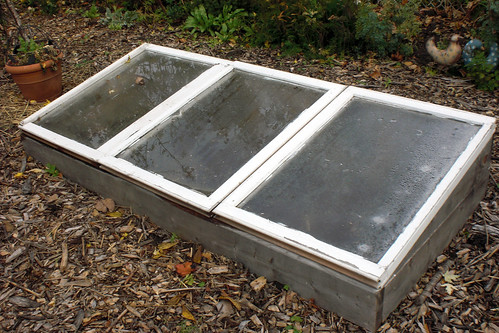
During the summer I grew peppers in this windowless frame. Now that fall has arrived and the peppers are done, the windows top the frame. Even during cloudy days they steam. I hope to learn when to vent this cold frame instinctually, but automatic solar venting devices might prove to be a better option. I figure if I "take" to cold climate gardening I may invest a little more into my next cold frame which will be higher allowing for taller plants.

CIMG7243

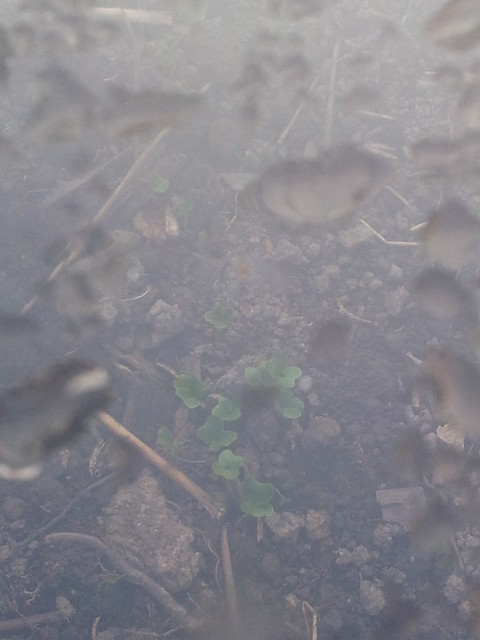
I planted a variety of greens including spinach, swiss chard, broccoli rabe, curly and lacinato kale on October 18th. I thought I might have been too late in my planting but all six rows have already sprouted!

Untitled

I planted greens that I felt could grow in much colder weather but it will be interesting to see the actual results of this experiment – of course, I'll keep you "posted." Over the Winter I will also be studying Eliot Coleman's The Winter Harvest Handbook in depth. If you are not familiar with Eliot Coleman, he is an expert in year-round cold climate gardening. He resides in Maine!

So, while the leaves are turning and continuing to fall, I'm looking forward to some green!

Untitled
Wild Grapes

Come Spring I hope to start seeds in this cold frame but that's another experiment for another day.

LinkWithin

Related Posts Plugin for WordPress, Blogger...

ShareThis