Tuesday, November 22, 2011

Berry Berry Good!

This year I can finally boast a few berries! Berries attract birds and just last evening a male Cardinal stopped by – a rare, but very welcome, occurrence in my young garden – the cover is not yet thick enough for a Cardinal's liking. Robins are still lingering. Robins actually spend the winters here where there are enough berries and fruit to sustain them. I see them regularly in a nearby state park through the entire winter where there are many dogwoods and chokeberries. (It is the Red-winged Blackbird that announces Spring for me.) The Catbird's calls were closer than ever this year, and more frequent.

My plan is for my garden to eventually offer a natural Winter feast. See, I hope to be able to migrate along with our feathered friends in the upcoming years. The Winters, though beautiful, are just too long here. My backyard birds will be able to feast on berries and seeds still standing in the garden instead of my feeders while I follow the sun. The progress in the garden looks promising.

The wild grapes were very abundant this year. I have seen migrating flocks of Cedar Waxwings enjoying these in the past.

Wild Grapes

Rosa Palustris Hips
Rosa Setigera Hips
Virginia Creeper Berries

Virginia Creeper will attract fruit eating birds such as Chickadees, Nuthatches, Mockingbirds, Catbirds, Finches, Flycatchers, Tanagers, Swallows, Vireos, Warblers, Woodpeckers, and Thrushes through the Winter.

Redosier Dogwood Berries
Cardinal Dogwood Berries
Elderberry Black Lace

Woodpeckers, Bluebirds, Cedar Waxwings, Orioles, and Grosbeaks are attracted to Elderberries.

Purple Prince Crabapple

Many birds enjoy Crabapple. So birds, enjoy the berry feast while I feast on, ah, hmm, er ... a bird of a different feather.

I am always thankful for the joy, work, clarity, groundedness, peace, harmony, abundance and enlightenment of the garden and life. Happy Thanksgiving.

Tuesday, November 15, 2011

Fall Foliage

This fall, I have more trees, though still very young; shrubs that are beginning to fill out; grasses that have become masses and new beds and perennials all with changing foliage and interesting seed heads. Since it is the foliage and not the blooms that is now the star of Northeastern gardens, I thought I would attempt joining Pam at Digging for Foliage Follow Up! (Hopefully, I will stay organized enough to participate regularly in this monthly blog event.)

I like to journal (through blogging) my garden each fall. I enjoy looking back through the years to see how my garden has changed and grown. Here is my garden (forever in the making) this Fall of 2011.

In the Bird & Butterfly Garden you are seeing Evening Primrose Oenothera, Mints (still green), Miscanthus 'Morning Light', Panicum 'Dallas Blues,' perennial sunflower Helianthus Microcephalus, Joe Pye Weed, Forsythia 'Meadowlark.'

Garlic Chives in the Potager
Bluecrop Blueberry in the Potager

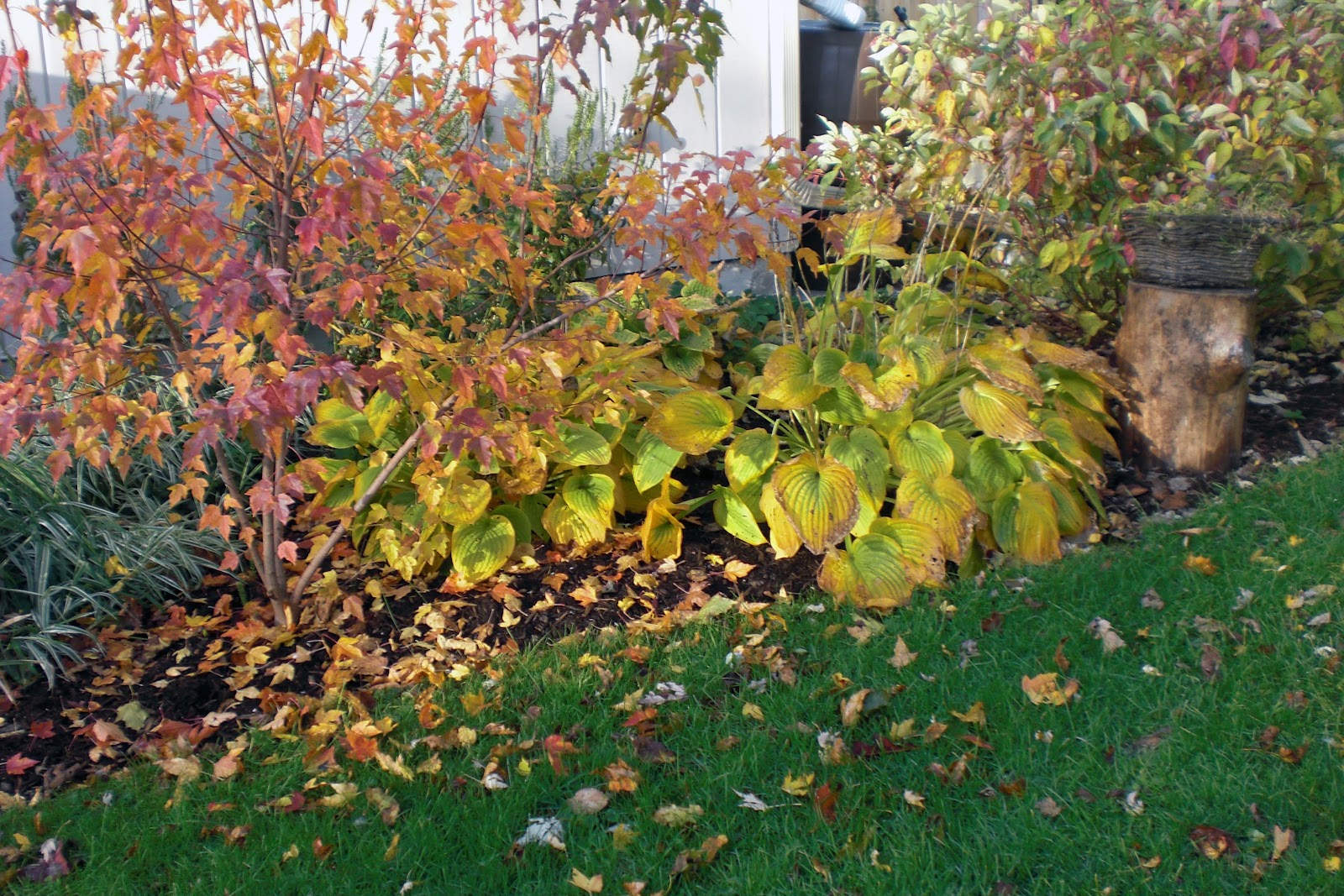
A new bed behind the garage workshop. The tree (facing to the left) I believe is an Amur Maple, not native and invasive so I cannot recommend it, but I cannot part with these trees. They were on my lot in Maine and two of them sprouted in a window box I brought with me – just look at this one now. I loved these trees in my Maine garden and keep them because they remind me of my home and garden there. Their fall foliage is always beautiful. Facing to the right, a Red Osier Dogwood.

Red Osier Dogwood

In the new Woodland Edge, much is happening. This Cardinal Dogwood's stems have turned and look rich before the Blue Spruce. In the foreground is the nearly purple foliage of Oakleaf Hydrangea 'Alice.'


Leaf of newly planted Red Maple (here, most of the Maples did not turn red this year)
Newly planted Pagoda Dogwood
Ligularia 'Desdemona'
Maidenhair Fern
Virginia Creeper
Leaves of young Tulip Tree in backyard

What's Blooming

Blooms are scarce. Even the Persicaria's blooms are faded and gone, but I swear I could dig a hole in the snow and still find Calendula blooms!

Calendula and Alberta Spruce in the Potager
Calendula and Gro Low Sumac along the Nice Driveway

If you want to add a perennial vine that blooms continuously, I recommend our native honeysuckle. Just look at all these blooms, in November!

Coral Honeysuckle Lonicera Sempervirens and Skyrocket Juniper

The blanket flower I received from our local garden club during our fall plant exchange is already blooming – it just couldn't wait for next year.

California Poppy hangs on.

Lamium 'Orchid Frost' can take the frost and still keep on blooming.


The Sedums still hold their blooming heads high.


What's blooming in your garden? Visit Garden bloggers' bloom day host, Carol at May Dreams Gardens the 15th of each month to let everyone know. I think I will have to turn indoors to find any blooms next month but we'll see ...

LinkWithin

Related Posts Plugin for WordPress, Blogger...

ShareThis