Wednesday, October 19, 2011

Project: Saving Heirloom Tomato Seeds

On a return trip from Rochester, I fell in love with this beautiful, large tomato at an organic farm stand. It was huge – at least 5" inches in diameter and felt like a baseball in my hand. I had to have it. The woman who owns the farm said I could save the seed. Yes, I had to save the seed and grow these in my garden next year! When we arrived home, I put it on this cute little plate and admired it for days – maybe a few too many days.


It is a German Striped Tomato, heirloom. Because it was love and meant to be, I then came across an article in Dave's Garden newsletter on how to save heirloom tomato seeds. The author made it sound so easy that I said, "Hey, I can do this!" And you can, too. The best part about saving the seed is that you can still eat the tomato – and delicious it was. (I sliced it up and ate it on some sprouted bread with homemade cream cheese and a dash of salt and pepper.)

The first thing to do is to scoop out the seeds, along with the gel, into a jar.


Then add some water, about 1/2 cup. Store somewhere where the smell does not offend you, because it will smell. In about a week, a whitish/gray mold will form over the top. This is what you want. You are fermenting the seeds to weed out the bad and discourage disease. (According to the article I read, if you are trading tomato seed it is proper etiquette to ferment your seeds.) If you have a weak stomach, don't look below. Eeeewwww!


Now, carefully scrape off the moldy film. I used a little spoon. Add a little water to the jar and stir. Good seeds sink. Bad seeds and any remaining pulpy gel will float. Keep stirring and carefully pouring off the water until all you have left is clean seed. Then strain the seed through a coffee filter or other material, and spread them out to let dry for a full day or two.


The seeds are now ready to store. I store my seeds in a little box.


I cannot wait to plant these in my garden. Hopefully, I've done this right and I will be slicing up baseball-sized German Striped Tomatoes next summer! I should also be able to save more seed and share. 

If you cannot get your hands on a German Striped Tomato, but would like to grow them in your garden next season, Johnny's offers the seed.

Source: Dave's Garden Saving Heirloom Tomato Seeds by Paul Rodman

Friday, October 14, 2011

What's Blooming

Blooms are fading fast. In the upcoming months it will be challenging to find any blooms outside in the garden, but we have had a true Indian Summer here in the North Country.

Out front Sweet Autumn Clematis is blooming. This plant can be invasive and I cannot recommend it. Of course, I didn't know that when I planted it. I imagine that here in zone 4 it is not so problematic as it may be further south. To make myself feel better I just planted two native Clematis Virginiana in other areas of the garden – this spot on the front porch receives too much sun. I do have to say the Sweet Autumn smells divine.


This Woods Aster (pink blooms) always punctuates fall. The sedums are just about ready to burst into bloom. Catmint Walker's Low is still faithfully blooming.


Along the drive California Poppies are bright as orange pumpkins. In the background Helenium and Verbascum bloom. Along the trellis the Purple Hyacinth Bean vine is still blooming strong and Scarlet O'Hara is now finally gloriously greeting the mornings.


In the woodland edge geranium Sylvia's Surprise is surprising me with more blooms.


Persicaria Firetail is the work horse this summer ... still a stunning show.


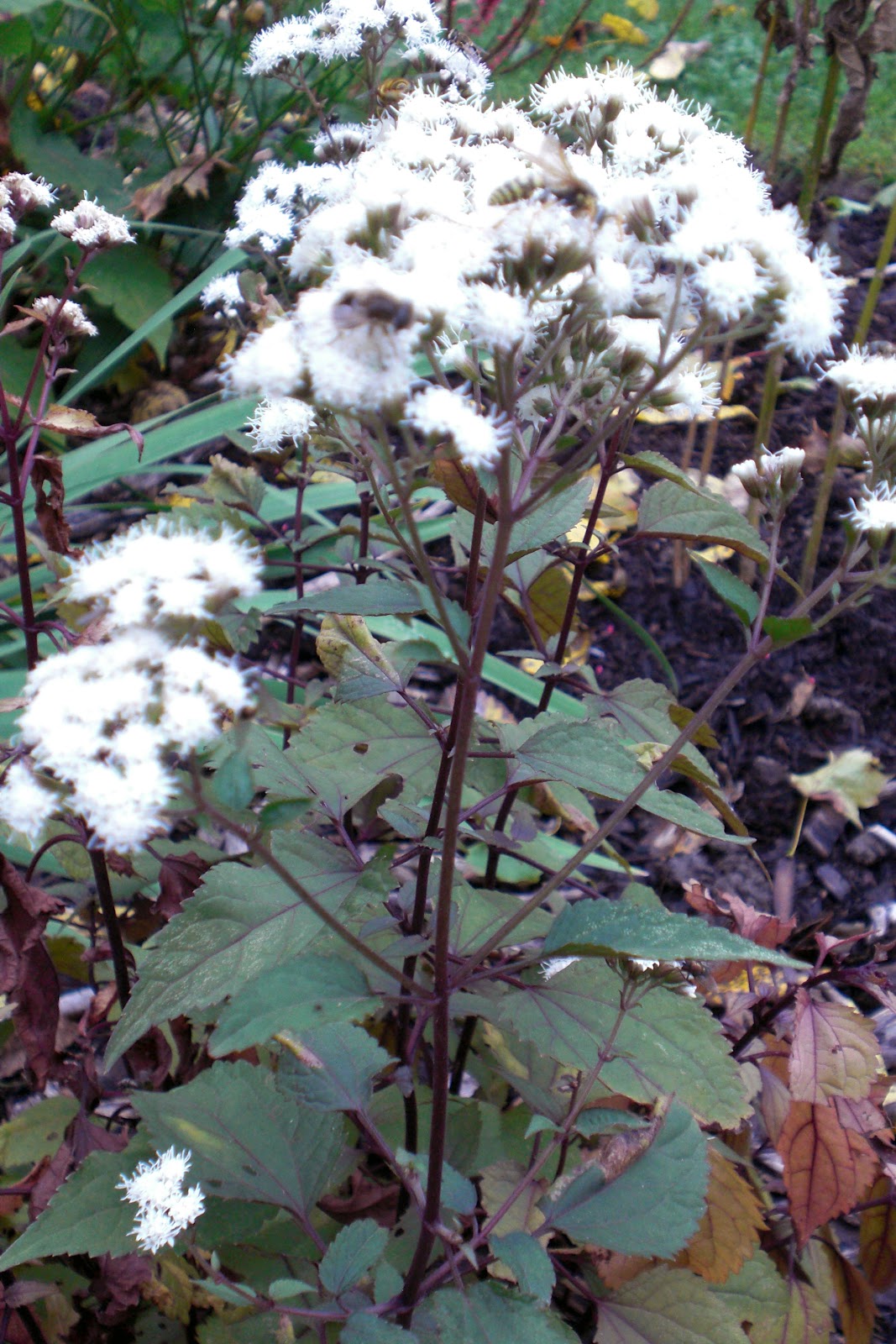
Chocolate Joe Pye was moved this year to this spot due to the porch renovation. Though not as big and bold in previous years, at least there are blooms to let me know that this spot will do. Hopefully next year will be big and bold once again. (Spied several flower flies on Joe Pye's blooms though I am not sure of the specific species. Will have to revisit with guide in hand.)


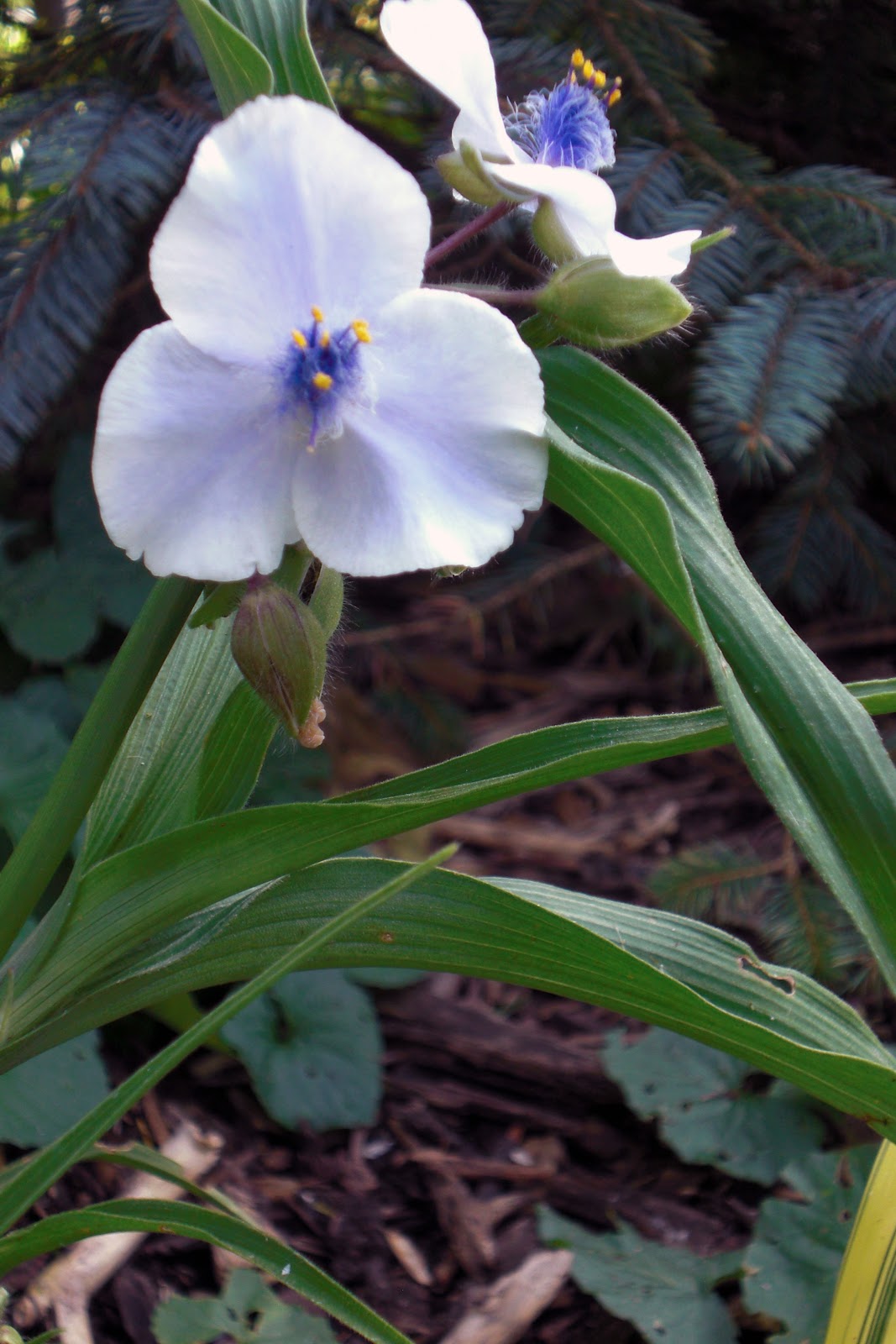
Tradescantia Osprey says BOO! These were given to me through the mail by Jean at Jean's Garden and were just planted this spring. Thank you Jean! They seem to be happy and they are oh so beautiful.


The potager is putting on a fall display of its own, no pumpkins, but comparable are the bright orange of marigolds and nasturtium.


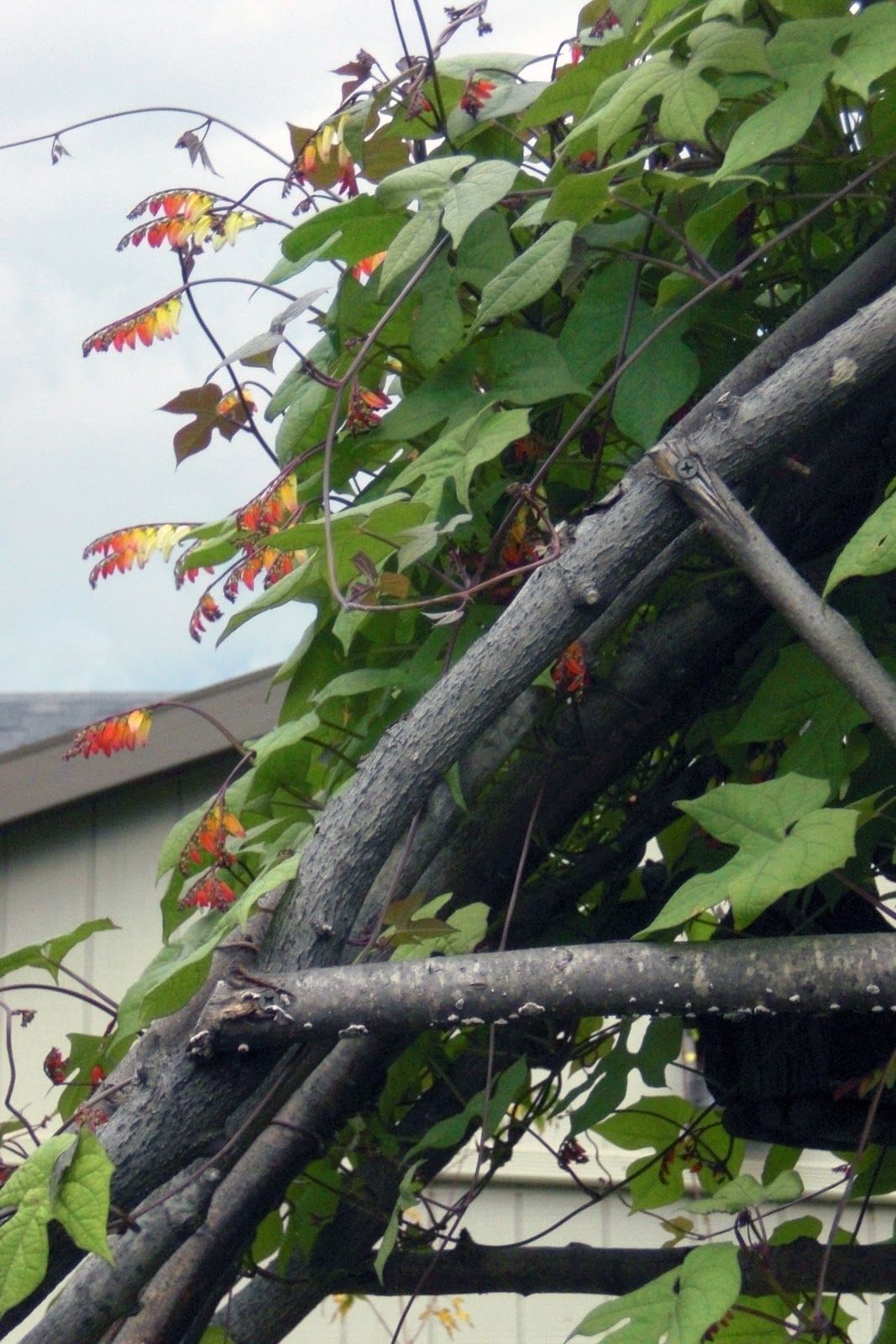
And at last the Exotic Love Vine is dripping with blooms! If we didn't have an Indian Summer, I'm not so sure if I would have been lucky at love.


Garden bloggers' bloom day is hosted by Carol at May Dreams Gardens the 15th of each month. Join in the fun with your blog blooms!

Thursday, October 6, 2011

Solidago Fireworks Attracts Fall Pollinators

I would like to add more goldenrods to my garden for fall pollinators and late season blooms. I planted a Little Lemon goldenrod last year but it did not make it so I will try it again (perhaps in a dryer location) because I really liked it. Common goldenrod volunteered in my garden this year and I am very pleased, but I will try seeding it in the places where I would rather have it be for next year. Prairie Moon Nursery offers a variety of native goldenrods for different conditions that I will also have to give a try.

Appreciatively, Solidago Fireworks has just bloomed in my garden – later than common godlenrod. I am not the only one who appreciates it. I captured this short video of the pollinators it has attracted. Many flies, wasps, bumble bees and what I believe to be a Yellow-collared Scape Moth. It is nice to see the fall garden so active.


Though I am not fond of the way its lower stems tend to brown and bare, I love the firework-like display of the blooms. It is very appropriately named! I am hoping the Liatris planted in front of it fills in to hide the lower stems a little more next year. I would still recommend this plant for the garden in spite of its bare ankles. It stays upright and does not flop. The blooms burst into golden rays and are beautiful in the way they "spray" in arcs – a very welcome sight this time of year, and it's obviously a popular gathering spot for pollinators. I purchased my Solidago Fireworks plants from Bluestone Perennials in case you would like to add this pollinator-friendly-fall-bloomer to your garden as well.

LinkWithin

Related Posts Plugin for WordPress, Blogger...

ShareThis