Sunday, August 1, 2010

A Snail's Pace

I think this little guy appeared to remind me that it's still summer and to sloooow down and enjoy what's left.


I have never seen a land snail in my garden before! I believe that this is an amber snail and I was worried that he? she? was going to eat my basil seedlings, but apparently they feed on microflora, fungi, algae, diatoms and other things that sound downright unappetizing. I'll stick with the basil.


It seems to me this is a good sign - that an amber snail should appear in my garden - the environment is balanced? But should a garden land snail appear, well, we might have the same tastes in food and that could be a problem.

There is an endangered species of amber snail in Chittenango, NY called the Chittenango Ovate Amber Snail. Who knew?


Happy trails little snail. I'll be sure to enjoy the last of this summer at a snail's pace.

Friday, July 30, 2010

July's Featured Bee

The month of June in my North American Native Bee Calendar purchased from the Great Sunflower Project, features the Wool Carder Bee, genus Anthidium. These bees emerge in summer and will nest in nesting blocks, preformed cavities in wood or hollow plant stems.

They are about 1/2-3/4 inches long depending on the species. Both the males and females have a black or brown abdomen with varying patterns of striking yellow or white markings.

The males are extremely territorial and will patrol a patch of preferred flowers jealously guarding it for potential female mates. They are easily recognized by their hovering, darting and ramming maneuvers. When other males or bees of another species attempt to land on the flower that's being guarded, the Anthidium male will hover for a moment near the trespasser and then forcefully bump him off.

I believe I've seen this in action and have several of these bees patrolling my sage, lamb's ear, and lemon balm. They truly do hover, dart and ram. This one I captured guarding my sage:


Wool Carder Bees are especially attracted to sage, lavendar, catnip and trefoil.

Tuesday, July 27, 2010

Whoops-a-Lily?

I say this every time I make an "oops," even though the saying is 'whoops-a-daisy.' Reason being one day at work (previous job), a friend and I decided we would substitute different flowers for the daisy each time we made a typographical error during catalog production. We would shout out "whoops-a-lily" (which stuck in my brain), or "whoops-a-petunia" or "whoops-a-pansy" ...  The earlier terms 'upsy-daisy,' 'upaday,' etc., appear to be the source of the term whoops-a-daisy although they have different meanings. The 'daisy' part is a fanciful extension of the word day. The name daisy itself derives from the word day. The daisy flower, which closes at night and exposes its yellow center in sunlight, was thought of as the day's eye. Upsy-daisy and derivatives were exclaimed when a child, in play, was assisted in a spring-leap from the ground (up from the daisies). The expression 'Whoopsie Daisy!', is first recorded in the New Yorker, in September 1925 and means to publicly acknowledge a mistake. It is now also exclaimed whoops-a-daisy, or whoops or oops. That's a lot of whooping.

Whoops-a-lily!

Whoops-a-lily!

Whoops-a-lily!

Whoops-a-Mojo!? How did he get in there? Oops.

Whoops-a-asiatic lily!

We're really whooping it up now!

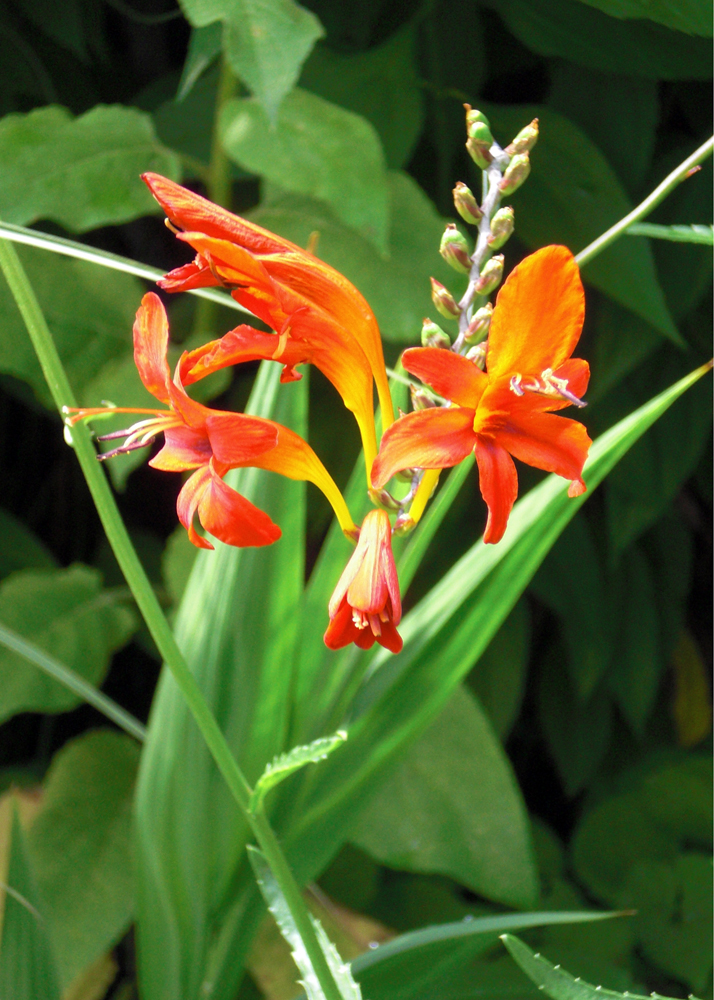
Whoops-a-crocosmia! Which is not a lily but is in the same family, Iridaceae, as ...

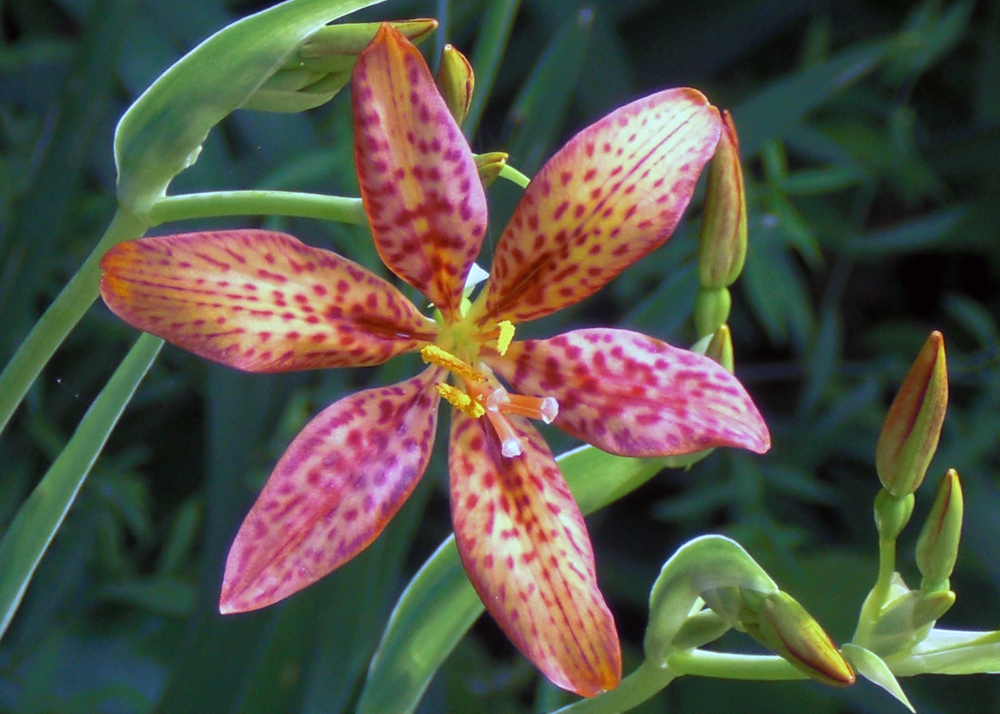
... the Blackberry Lily - which is not a lily at all!

Whoops-a-crazy-daisy!

Anyway, these are all blooming in my garden right now and I have fun walking around "whoopsinging" all the day long.

LinkWithin

Related Posts Plugin for WordPress, Blogger...

ShareThis