Showing posts with label Eupatorium Gateway. Show all posts

Tuesday, October 9, 2012

Eight, Nine, Ten Picks for Diana!

I am really trying to join Diana of Elephant's Eye in choosing twelve months of my favorite garden plants. Since when does a month go by so fast? Not just one, but three and here it is Fall already. I expect our first frost any night. I think my garden shines in Fall and it is one of my favorite times to be in it. It could be that I have some excellent Fall plants that glow in the cooler days, dewy mornings and chilly nights. So, it would be some of these plants that I would choose for the following months.

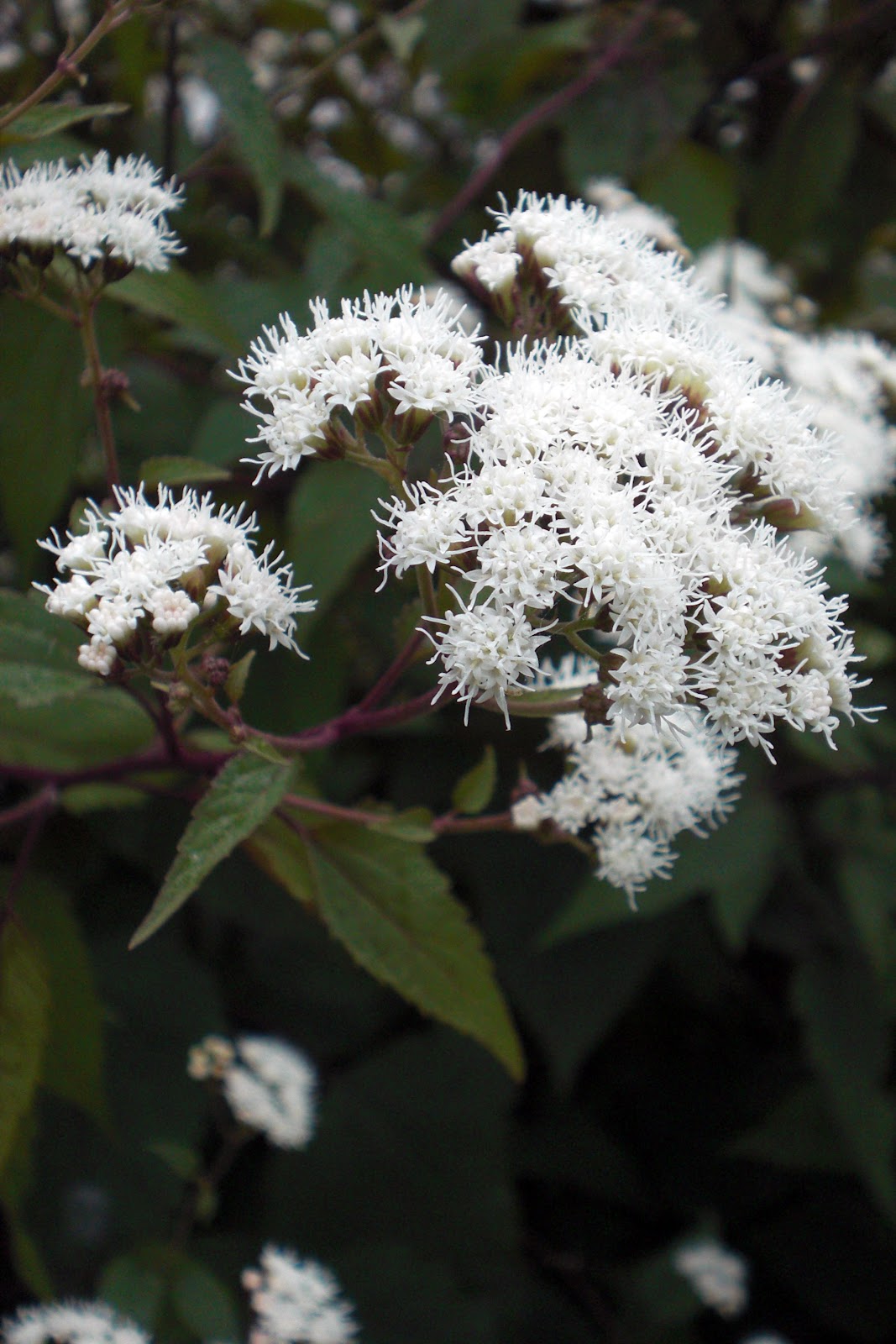
August — Joe Pye Weeds. Nothing attracts butterflies and other pollinators like the Joe Pye. They are bold, tall, stately and beautiful in the garden. My Eupatorium Gateway looms over an impressive 6'. Its nodding billow of pink blooms are 8-10" across, maybe even larger! In August, it is its showiest but its spent blooms, turning a rustic brown, last well into fall. Eupatorium Rugosum or Chocolate Joe Pye blooms later in September, even into October. Its white heads of flowers light up against its dark, chocolatey foliage.

Joe Pye Gateway

Eupatorium Rugosum Chocolate

September — Rudbeckias. My favorites: Rudbeckia Laciniata or Green Cutleaf Coneflower, Rudbeckia Maxima or Giant Coneflower, and of course the staple of all Northeastern Fall gardens, Rudbeckia Hirta or Black-eyed Susans. I may also have Rudbeckia Triloba or Brown-eyed Susan, that popped up from some wildflower seed. I have to take a closer look to distinguish between the two. Either way, a drift of Susans is always the grand finale of Summer. Cutleaf Coneflowers are also big and bold in the garden. Their masses of smaller yellow sunflower-like blooms dance above their almost tropical-looking leaves. Birds and bees love them. I have several plants of Rudbeckia Maxima along the Nice Driveway which is drier. They are still establishing themselves, and have even reseeded in a few spots. I love their tall candle-like cones even after the yellow petals of their blooms have dropped off and their banana-like leaves in blue shades. I catch Chickadees and Gold Finches enjoying their seed.

 A drift of Black-eyed Susans with Joe-Pye in the Bird & Butterfly Garden


Rudbeckia Laciniata

Rudbeckia Laciniata

Rudbeckia Maxima

Rudbeckia Maxima

October — Asters. I admit, my garden needs more Asters! I wish the garden centers around here would sell/push Asters in the Fall instead of just Mums. I don't buy Mums anymore because most of them aren't truly hardy here and I hate to just throw them away come December. I have a few Asters at home in my garden: Woods Pink Aster Dumosus, Jim Crockett, and October Skies. October Skies is newly planted and is still establishing. Jim Crockett seems to bloom earlier than most. Woods Pink is now covered in blooms.

Woods Pink, Aster Dumosus

An Aster we came upon in a recent hike.
Possibly Aster drummondii (Drummond's Aster) or Aster saggitifolius (Arrow-leaved Aster).

Here is a list of my former picks for Diana. Only two more months to go ... I am sure they will go quickly.

January: Sunflowers
February: Wild Roses
March: Lady's Mantle
April: Poppies
May: Iris
June: Alliums
July: Bee Balm

Wednesday, December 21, 2011

Going Native: Joe Pye Weed

Even though the holidays are only days away and I have a long list of things to do, here I am dreaming of Spring and planning changes for my garden ... you are too, aren't you?

Well, if there was one native plant I had to choose or recommend as a nectar source for pollinators, my choice would be Joe Pye Weed. If you do not have this beautiful American native and can grow it near you, be sure to include it in your plans. I have two patches started in two different areas of my garden. The minute Joe Pye comes into bloom, it is covered in bees, flies, butterflies, and even hummingbirds.


There are many varieties of Joe Pye to choose from. I am growing Eupatorium purp. maculatum Gateway, a cultivar which I purchased from Bluestone Perennials. It is so far, the tallest Joe Pye I have in my garden. This fall I discovered a few volunteers and have moved them into other areas of my garden.

Eupatorium Gateway
White Admiral Butterfly on Eupatorium Gateway

I am also growing Eupatorium maculatum or Spotted Joe Pye Weed, a true native I purchased from Prairie Moon.

Eupatorium maculatum
Monarch Butterfly on Eupatorium maculatum

A native choice for more shaded areas would be Eupatorium purpureum or Sweet Joe Pye Weed (which I have just added to my wish list for the north side of our garage/workshop). Its blooms have a vanilla scent and Prairie Moon notes that Native Americans used this plant to cure fevers.

I am also growing Eupatorium rugosum 'Chocolate,' or Snakeroot. Its leaves are burgundy and its blooms white. It blooms much later in the fall.


Just a note that on Lady Bird Johnson's Wildflowercenter site, the Joe Pye Weeds have been assigned to the genus Eupatoriadelphus to separate them from the Bonesets (Eupatorium). Some sources still refer to Joe Pye species as Eupatorium. The genus Eupatoriadelphus differs from the genus Eupatorium by whorled leaves, while Eupatorium has opposite leaves. I find that the blooms of either genus attract many pollinators. 

If you like merry butterflies, try growing a variety of Eupatorium, or Eupatoriadelphus. Maybe more than one?

LinkWithin

Related Posts Plugin for WordPress, Blogger...

ShareThis